
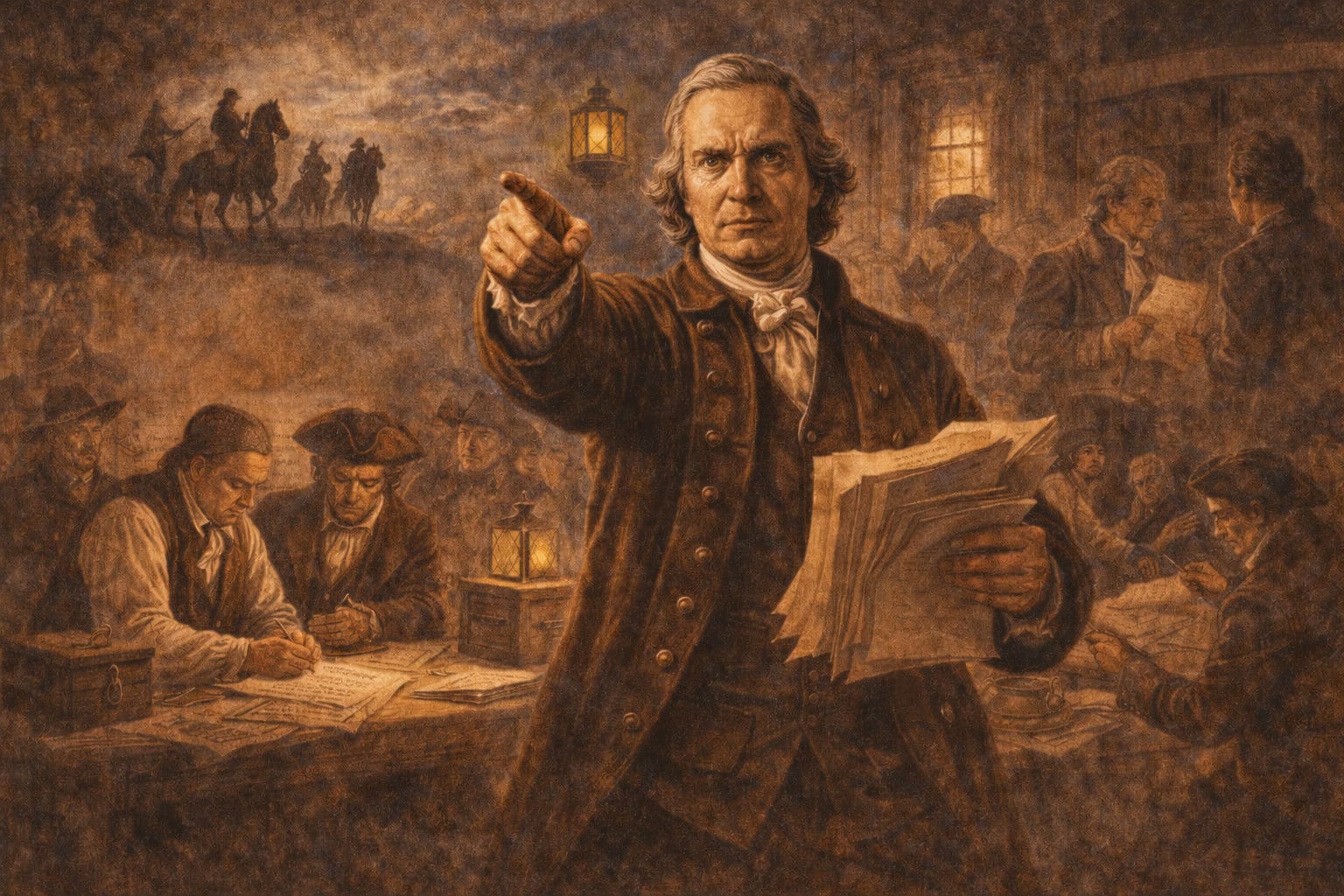
Revolutions don’t start with declarations. They start with organization. Samuel Adams didn’t command armies. While his career as a brewer was less than auspicious, he did discover a unique talent later in life: linking the philosophical with actual political organizing.
Adams built networks like the Committees of Correspondence; local organizing structures that served as information pipelines before information moved easily. He built spy networks and with the help of Dr. Joseph Warren and Paul Revere, a system of messengers who could rapidly spread the word regarding British plans and movements.
Adams understood something most people miss: outrage without structure burns out. But outrage with structure spreads.
When Parliament passed the Stamp Act and then the Townshend Acts, Adams didn’t just protest. He coordinated boycotts and messaging, mobilizing resistance across colonies that had more differences than similarities.
He turned scattered frustration into shared cause. And then came the Tea Act.
The Boston Tea Party wasn’t random chaos. It was controlled defiance. Targeted. Symbolic. Strategic.
Adams didn’t throw tea. He created the conditions where throwing tea meant something. Where it resonated beyond Boston and forced a response.
Which is exactly what happened.
The Coercive Acts followed and with them escalation. Adams understood escalation was inevitable and was ready to galvanize the rest of the colonies into action. The British thought they would crush Boston and the colony of Massachusetts, isolating it and starving it into submission. But their great miscalculation? They failed to understand Adams’ robust network thoughout the colonies.
Years ahead of the Coercive Acts, Adams knew the question wasn’t whether conflict would come. It was whether the colonies would be ready when it did. And he made sure they were ready.
This is the second American lesson: Movements don’t succeed because people are angry.
They succeed because someone builds the structure that gives anger direction. Adams didn’t win the war. He made it possible. And that is precisely why he is called the Father of the American Revolution.
Thanks for sharing. I'm all about our heritage and our founding fathers' intentions. Reminded me of watching Sons of Liberty from the History Channel a few years back. We need that same fuse today...
Excellent!!