
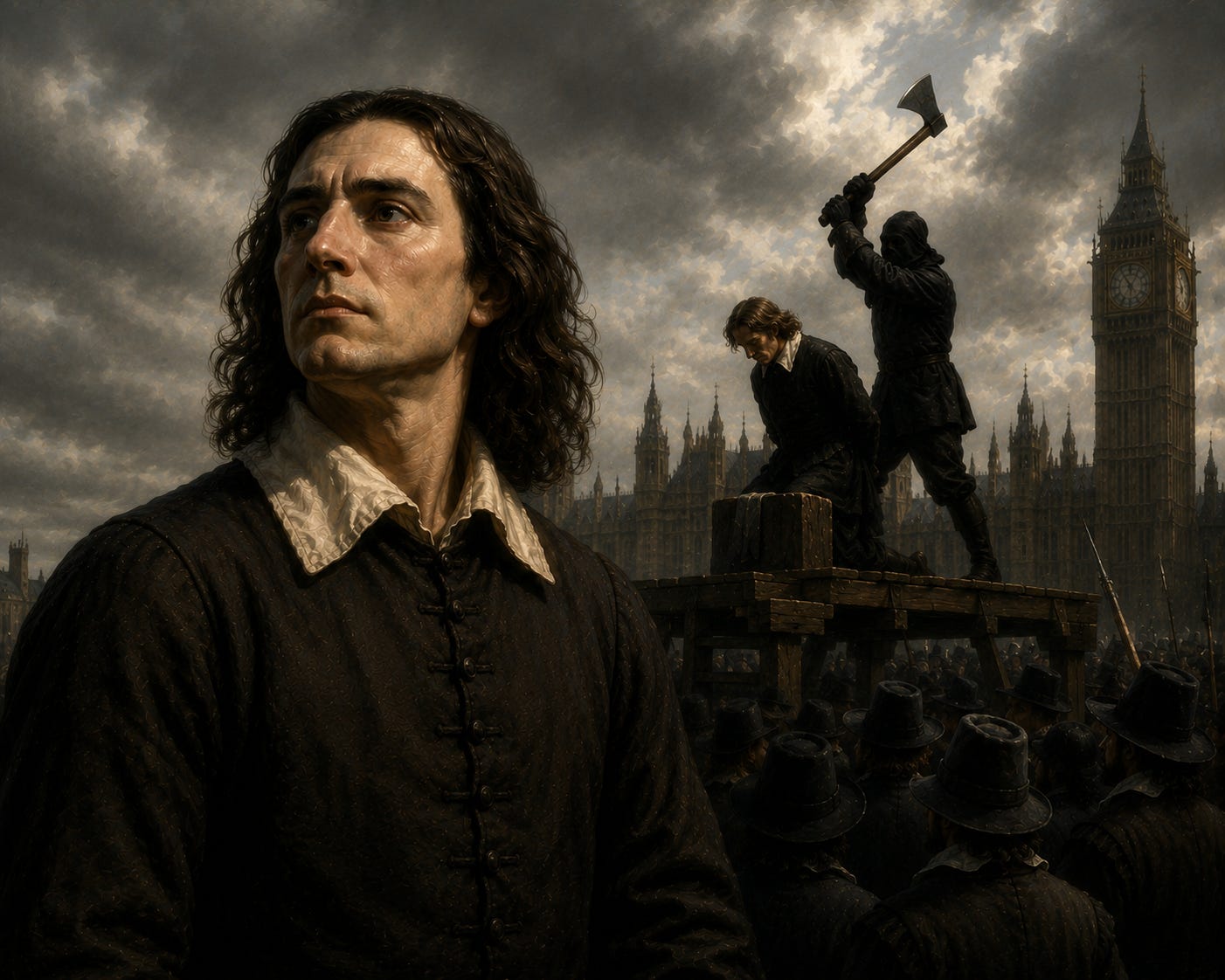
Long before Jefferson wrote a declaration, Algernon Sidney lost his head. Literally.
A Parlimentarian who fought with Cromwell in the English Civil War, Sidney was executed in 1683 for opposing royal absolutism.
For years he’d argued that legitimate government rests on consent, not inherited authority. In the age of the divine rights of kings, Sidney rejected the idea.
He argued for a government limited in size and scope and based on the consent of the people.
If the government becomes corrupt, the people should abolish it.
For those ideas, considered seditious at the time, Sidney was convicted of treason and beheaded in December of 1683.
But his writings lived on and crossed the Atlantic. Colonists read them obsessively.
Jefferson later acknowledged Sidney alongside Locke as one of the major influences behind the Declaration.
Sidney’s life revealed something the founders never forgot: The argument for liberty often carries a cost. Ideas matter because power fears them.
And few ideas frightened monarchies more than the belief that governments exist for the people, not the other way around.