
Americans celebrate July 4.
John Adams believed they should celebrate July 2.
Because July 2 was the day American independence actually became official.
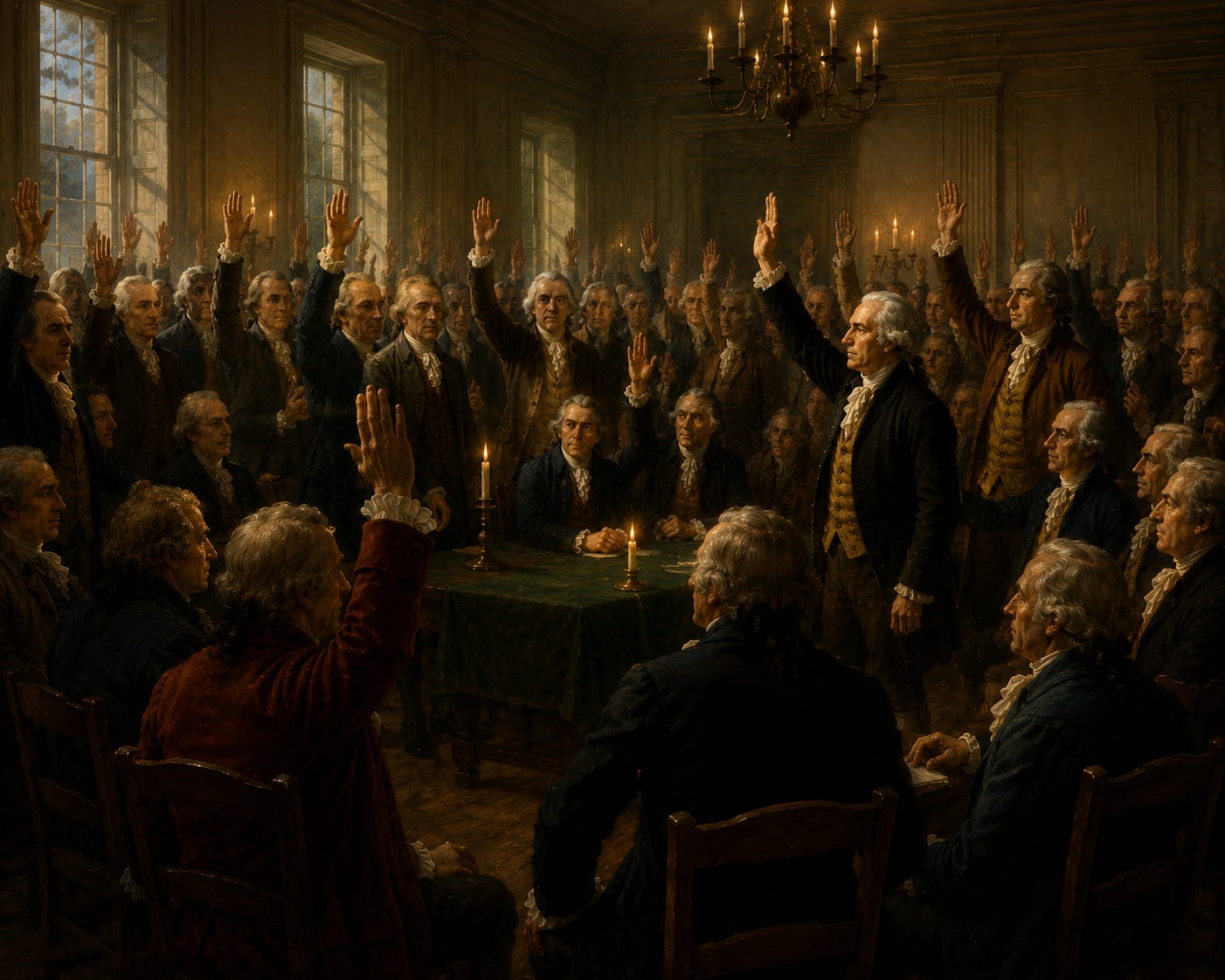
After weeks of debate following Richard Henry Lee’s resolution, and then the drafting of the Declaration, the Continental Congress voted in favor of independence on July 2, 1776.
The colonies were no longer politically connected to Britain.
The decision was final.
Adams immediately understood the magnitude of the moment. He wrote to his wife Abigail that July 2 would become one of the great celebrated dates in human history:
The Second Day of July 1776, will be the most memorable Epocha, in the History of America. I am apt to believe that it will be celebrated, by succeeding Generations, as the great anniversary Festival. It ought to be commemorated, as the Day of Deliverance by solemn Acts of Devotion to God Almighty. It ought to be solemnized with Pomp and Parade, with Shews, Games, Sports, Guns, Bells, Bonfires and Illuminations from one End of this Continent to the other from this Time forward forever more.
You will think me transported with Enthusiasm but I am not. -- I am well aware of the Toil and Blood and Treasure, that it will cost Us to maintain this Declaration, and support and defend these States. -- Yet through all the Gloom I can see the Rays of ravishing Light and Glory. I can see that the End is more than worth all the Means. And that Posterity will tryumph in that Days Transaction, even altho We should rue it, which I trust in God We shall not.
Adams was off by two days. But not by significance.
The vote itself represented something remarkable. Delegates were not merely signing a symbolic protest. It wasn’t just about leaving behind their claims to inherited rights and charter rights as Englishmen and embracing natural inherent rights as the basis for them declaring independence.
No, in the eyes of the Crown and Parliament they were committing treason against the most powerful empire on earth.
If the Revolution failed, many of them would likely be executed.
That reality tends to get sanitized in modern retellings. But the Founders were not influencers managing optics. They were men risking everything.
And importantly, the vote for independence did not emerge from elite decree alone. It reflected years of growing colonial self-government, local resistance, militia organization, pamphlet campaigns, church debates, and civic mobilization. In some ways, declaring independence was simply an acknowledgement of what already existed in reality.
The Declaration would explain and justify independence. The July 2 vote enacted it.
That distinction matters.
America became independent not because of rhetoric alone, but because political leaders formally accepted responsibility for self-government.
That is the core American idea: Free people governing themselves rather than being permanently managed from above.
The British Crown viewed authority as its by inheritance and the divine right of kings. The American Revolution increasingly treated authority as something delegated conditionally by citizens to secure and protect their rights.
That remains one of the great unresolved tensions in modern politics.
Who governs? Permanent managerial systems from above? Or the people themselves?
July 2 represented the moment America answered that question publicly.
The colonies chose self-government.
And once they did, history changed.
I wonder what place we’d be in if we had used July 2. What was in the stars?